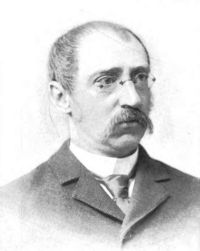
Henry A. Beers

Henry A. Beers

Summary

Portrait of Henry A. Beers Henry A. Beers Milton's Tercentenary

Very significant is the inferiority of Paradise Regained to Paradise Lost. And in Paradise Lost itself, how weak and faint is the character of the Savior! You feel that he is superfluous, that the poet did not need him. He is simply the second person of the Trinity, the executive arm of the Godhead; and Milton is at pains to invent things for him to do—to drive the rebellious angels out of heaven, to preside over the six days' work of creation, etc.
Source: Gutenberg

Portrait of Henry A. Beers Henry A. Beers Milton's Tercentenary

They are fickle, ignorant, illogical, thick-headed, easily imposed upon. Still he makes you feel that they are composed of good fellows at bottom, quickly placated and disposed to do the fair thing. I think that Shakspere's is the more democratic nature; that his distrust of the people is much less radical than Milton's. Walt Whitman's obstreperous democracy, his all-embracing camaraderie, his liking for the warm, gregarious pressure of the crowd, was a spirit quite alien from his whose "soul was like a star and dwelt apart."
Source: Gutenberg

Portrait of Henry A. Beers Henry A. Beers Milton's Tercentenary

England is still a monarchy; the English church is still prelatical and has its hireling clergy; Parliament keeps its two chambers, and the bishops sit and vote in the house of peers; ritualism and tractarianism gain apace upon low church and evangelical; the Areopagitica had no effect whatever in hastening the freedom of the press; and, ironically enough, Milton himself, under the protectorate, became an official book licenser.
Source: Gutenberg

Get perspective with Kwize: daily news enlightened by great literature