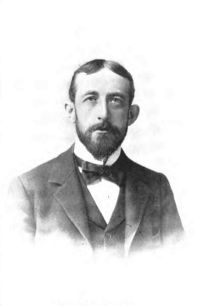
William Peterfield Trent

William Peterfield Trent

Summary

Portrait of William Peterfield Trent William Peterfield Trent The Cambridge History of American Literature (1917)

With its companion pieces The Reaper and the Flowers, The Light of Stars, and Footsteps of Angels, it is undoubtedly amenable to some of the harsh criticism it has received from those persons who seem to imagine that taste thrives only on its own exigency. But it is hard to see how verses of subtler quality would have so sung themselves through the length and breadth of young America, or could have laid so broad and deep a foundation for the fame of the most heartily loved poet of his generation.
Source: Wikisource

Portrait of William Peterfield Trent William Peterfield Trent The Cambridge History of American Literature (1917)

Reading his letters and his diaries, putting together the biographical details furnished by others, and constructing as best one can the man’s life and spirit from his writings, one is forced to the conclusion that except for a single great tragedy—the accidental burning to death of his wife in 1861—Longfellow’s is one of the most serenely fortunate careers ever led by a man of letters.
Source: Wikisource

Portrait of William Peterfield Trent William Peterfield Trent The Cambridge History of American Literature (1917)

We track the footsteps of the naïve hero of Hyperion with less confiding delight than our grandfathers and grandmothers probably experienced, but then we are less sentimental and more widely travelled than they were, facts which of course do not warrant us in arrogating to ourselves a taste necessarily superior to theirs. Hyperion doubtless meant more to the author and his countrymen than a scholarly monograph would have meant, for what America needed just then, apparently, was some one who, like Longfellow, could carry on the work begun by Irving of interpreting the Old World to the New.
Source: Wikisource

Get perspective with Kwize: daily news enlightened by great literature