Summary

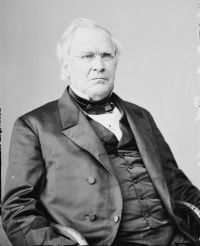
Portrait of Robert Cooper Grier Robert Cooper Grier Badger v. Badger — Opinion of the Court

In such cases, courts of equity act upon their own inherent doctrine of discouraging, for the peace of society, antiquated demands, refuse to interfere where there has been gross laches in prosecuting the claim, or long acquiescence in the assertion of adverse rights. Long acquiescence and laches by parties out of possession are productive of much hardship and injustice to others, and cannot be excused but by showing some actual hindrance or impediment, caused by the fraud or concealment of the parties in possession, which will appeal to the conscience of the chancellor.
Source: Wikisource

Portrait of Robert Cooper Grier Robert Cooper Grier Badger v. Badger — Opinion of the Court

The following abstract, quoted in the words used in various decisions, will suffice for the purposes of this decision:
'Courts of equity, in cases of concurrent jurisdiction, consider themselves bound by the statutes of limitation which govern courts of law in like cases, and this rather in obedience to the statutes than by analogy.
'In many other cases they act upon the analogy of the like limitation at law. But there is a defence peculiar to courts of equity founded on lapse of time and the staleness of the claim, where no statute of limitation governs the case.
Source: Wikisource

Portrait of Robert Cooper Grier Robert Cooper Grier Badger v. Badger — Opinion of the Court

For more than twenty-five years the widow and heirs have acquiesced in this sale, and it is more than thirty since the administration account was settled, which is alleged to have been fraudulent. The guardian of the complainant, who approved the account, is dead; the widow died in 1855. Two of the heirs were of full age in 1831, and the others afterwards.
Source: Wikisource

Get perspective with Kwize: daily news enlightened by great literature