Summary

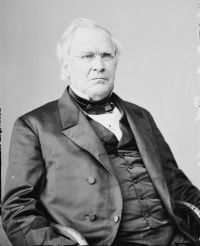
Portrait of Robert Cooper Grier Robert Cooper Grier Orton v. Smith — Opinion of the Court

If they have suits pending in other courts, on the same question of title, they must cease. This bill acts by injunction on the party-no injunction ever goes to the court having a concurrent jurisdiction of the question. The courts of the United States have no such power over suitors in a state court. But a decree on a bill of peace which does not put an end to litigation is a mere brutum fulmen. Unless the court can make a decree which it can execute, it is a sufficient reason for refusing to take cognizance of the case.
Source: Wikisource

Portrait of Robert Cooper Grier Robert Cooper Grier Orton v. Smith — Opinion of the Court

It is a rule absolutely necessary to be observed by courts who have a concurrent jurisdiction, that in all cases 'where the jurisdiction of a court and the right of a plaintiff to prosecute his suit in it have once attached, that right cannot be arrested or taken away by proceedings in another court.' This rule, it is said, 'has its foundation not merely in comity, but in necessity.
Source: Wikisource

Portrait of Robert Cooper Grier Robert Cooper Grier Orton v. Smith — Opinion of the Court

When the sheriff puts Orton in possession under the decree of the state court, and expels Smith, the circuit court, by its officer, must replace Smith, or imprison Orton for a contempt. This would indeed be a humiliating spectacle. Such a disreputable collision of jurisdictions should be sedulously avoided. This can only be done by refusing to entertain a bill of peace for an injunction when the title is in litigation in a court of concurrent jurisdiction; otherwise, the result of a bill of peace may be not peace but war
Source: Wikisource

Get perspective with Kwize: daily news enlightened by great literature