Summary

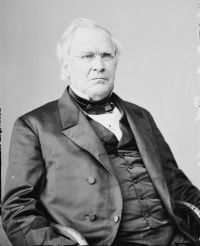
Portrait of Robert Cooper Grier Robert Cooper Grier Thompson v. Roberts — Opinion of the Court

The plaintiffs in error have not called in question the correctness of the general principle of law assumed by the court below, viz.: 'that the judgment of a court of law, or a decree of a court of equity, directly upon the same point, and between the same parties, is good as a plea in bar, and conclusive when given in evidence in a subsequent suit.'
But it is objected to this instruction, that it submits as a question of fact to the jury what ought to have been decided by the court as matter of law from the face of the record produced.
Source: Wikisource

Portrait of Robert Cooper Grier Robert Cooper Grier Thompson v. Roberts — Opinion of the Court

The verdict being for the plaintiffs below, establishes the identity of the defences in the two causes; so that it is presumed the only subject for inquiry is, whether the decree of the court of equity on the matter of a defence taken in a proceeding in rem, to enforce payment of a debt by sale of the pledge, is conclusive on the same matter offered as a defence in an action in personam, for recovery of the same debt. The defendants in error maintain the affirmative on this question.
Source: Wikisource

Portrait of Robert Cooper Grier Robert Cooper Grier Thompson v. Roberts — Opinion of the Court

It is true, Smith, who endorsed the notes to the plaintiffs below, and who was interested in the question, was joined as complainant, and the Pickell Mining Company, who had purchased the mortgaged property, were made respondents, according to the practice in courts of chancery, where all parties having an interest in the question to be tried are made parties, that the decree may be final as to all the matters in litigation.
Source: Wikisource

Get perspective with Kwize: daily news enlightened by great literature