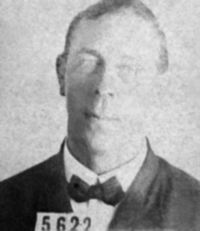
“ In Garstin’s picture Arabian was unmistakably a being of the underworld, a being of the darkness, of secret places and hidden deeds, a being of unspeakable craft, of hideous knowledge, of ferocious cynicism. And yet he was marvellously handsome and full of force, even of power. It could not be said that great intellect was stamped on his face, but a fiercely vital mentality was there, a mentality that could frighten and subdue, that could command and be sure of obedience. In the eyes of a tiger there is a terrific mentality. Miss Van Tuyn thought of that as she gazed at the portrait. ”
Summary
“December Love”, is a work by Robert Hichens. It explores elements such as Lady Sellingworth, Van Tuyn and Craven.
Quotes from December Love (Robert Hichens)
“ But Lady Sellingworth evaded her gently. “I’m too lazy for Paris now,” she said. “I no longer care for moving about. This old town house of mine has become to me like my shell. I’m lazy, Beryl; I’m lazy. You don’t know what that is; nor do you, Mr. Craven. Even you, Seymour, you don’t know. For you are a man of action, and at Court there is always movement. But I, my friends—” She gave Craven a deliciously kind yet impersonal smile. “I am a contemplative. There is nothing oriental about me, but I am just a quiet British contemplative, untouched by the unrest of your age.” ”
“ But she was an elderly woman now, so elderly that many people would no doubt think that it was impossible that she should be in love. How little such people knew about human nature! The evening had been almost as wonderful and as exciting to her as it could have been to a girl. When she had come into the hall of the Carlton and had seen Craven through the glass, had seen his tall figure, smooth, dark hair, and animated face glowing with health after the breezes and sunrays of Beaconsfield, she had known a feeling that a girl might have understood and shared. ”
“ In those days they often fascinated me, as no doubt the Cafe Royal and its life fascinates Beryl to-day. The hectic appeals to something in youth, when there is often fever in the blood. Strong lights, noise, the human pressure of crowds, the sight of myriads of faces, the sound of many voices—all that represents life to us when we are young. Calm, empty spaces, single notes, room all round us for breathing amply and fully, a face here or there—that doesn’t seem like life to us then. Beryl dines with me alone sometimes. ”
“ Lady Sellingworth did not take up a book or occupy herself in any way. She just sat still in the armchair and waited. Now and then she heard a faint footfall, the hoot of a motor horn, the slight noise of a passing car. And loneliness crept upon her like something gathering her into a cold and terrible embrace. It occurred to her that she might ask Craven presently through the telephone to come and dine in Berkeley Square. No one would see her with him if she did that, except her own servants. ”
“ But in spite of that triumph, Lady Sellingworth felt almost desperately afraid that night when she was alone. For she knew how great the difference was between her feeling for Craven and his feeling for her. And with greater intimacy that difference, she felt sure, must even increase. For she would want from him what he would never want or even dream of wanting, from her. He would be satisfied in their friendship while she would be almost starving. He would never know that cruel longing to touch which marks the difference between what is love and what is friendship. ”
“ But her mind was charged with intense vitality. The thoughts galloped through it, and they were dark as the night. The cold air of winter stole in through the doorway of the hall. She felt it and shivered as she lay back in the great chair which, with its walls and roof, was like a hiding-place; and for the first time in her life she longed to hide herself. She had never before known acute fear—fear that was based on ascertained facts. But she knew it now. The young footman stood on the doorstep bareheaded, looking this way and that into the blackness, and she sat waiting. ”
“ She felt that day as if all the rampart of will, which ten years’ labour had built up between her and the dangers and miseries attendant upon such a temperament as hers, were beginning before her eyes to crumble into dust, touched by the wand of a maleficent enchanter. And it was Craven’s fault. He should have been like other young men, obedient to the call of beauty and youth; he should have been wax in Beryl Van Tuyn’s pretty hands. ”
“ Do you ever sit here without a friend or guest?” “Now and then, but not often at night,” said Miss Briggs, with serene self-possession. “You are an extraordinary woman!” said Lady Sellingworth. “Extraordinary! Why?” “Because you always seem so satisfied to live quite alone. I hate solitude. I’m afraid of it.” Suddenly she felt that she must be partially frank with her hostess. “Is self-respect a real companion for a woman?” she said. “Can one sit with it and be contented? Does it repay a woman for all the sacrifices she has offered up to it? Is it worth the sacrifices? ”
“ Atmosphere has a spell which increases upon us the longer we remain bathed in it. Lady Sellingworth said all this to herself that night, and rebuked herself for letting her mind go towards old age. She rebelled against the longing for complete peace of mind because she now connected such a longing with stagnation. And men, especially young men, love vivacity, restlessness, the swift flying temperament. Such a temperament suggests to them youth. It is old age which sits still. Youth is for ever on the move. ”
“ In her independence she had never before known what it was to feel abandoned to loneliness. She had always enjoyed her freedom. Now she felt a great longing to cling to someone, to be protected, to lean on somebody who was much stronger than herself, and who would defend her against any attack. At that moment she envied Lady Sellingworth safe above stairs in this silent and beautiful house, which was like a stronghold. She even envied, or thought she did, Lady Sellingworth for her years. In old age there was surely a security that youth could never have. ”
“ The prelude in Soho had no doubt prepared the way for such talk by carrying them to Naples on wings of music. They would not have talked just like that after a banal dinner at Claridge’s or the Carlton. Craven had shown the enthusiasm that was in him for the sun, the sea, life let loose from convention, nature and beautiful things. The Foreign Office young man—quiet, reserved, and rather older than his years—had been pushed aside by a youth who had some Pagan blood in him, who had some agreeable wildness under the smooth surface which often covers only other layers of smoothness. ”
“ The musicians were playing “O Sole mio!” And as the music grew more distinct in her ears she felt more solitary, more injured and more ill-humoured. Music of that type makes youth feel that the world ought of right to belong to it, that the old are out of place in the regions of adventure, romance and passion. That they should not hang about where they are no longer wanted, like beggars about the door of a house in which happy people are feasting. “Such music is for me not for Adela Sellingworth,” thought Miss Van Tuyn. ”
“ Lady Sellingworth knew she was sixty, but she felt like a woman of thirty at that moment. And yet she was not deceived, was not deceiving herself. She did know—or felt that she absolutely knew—that the curious spell she had evidently been able, how she scarcely knew, to exert upon Craven during his visit to her that night could not possibly be lasting. He must be a quite unusual young man, perhaps even in some degree abnormal. But even so the fascination he had felt, and had shown that he felt, could not possibly be a lasting fascination. ”
“ Then she thought of her first widowhood and of her curious year in Paris. There she might more easily have made the acquaintance of the unknown man in some Bohemian cafe, where people talked to each other casually, giving way to their natural impulses, drifting in and out as the whim took them, careless of the convenances or actively despising them. In London, at any rate if one is English and cursed by being well known, one lives in a strait waist-coat. Lady Sellingworth felt the impossibility of speaking to a stranger without an introduction in spite of her secret wildness. ”
“ Miss Van Tuyn said nothing for two or three minutes. Her mind had gone from Lady Sellingworth to Craven, and then flitted on—she did not know why—to the man who had gazed at her so strangely in the Cafe Royal. She had been feeling rather neglected, badly treated almost, and his look had restored her to her normal supreme self-confidence. That fact would always be to the stranger’s credit. She wondered very much who he was. His good looks had almost startled her. She began also to wonder what Garstin had thought of him. Garstin seldom painted men. ”
“ Seymour Portman’s observant old eyes, the terrible eyes of affection, took in the change in her, not quite as a woman’s eyes would have done, but in their own adequate way. His Adela looked different. Something had happened to her. The envelope had been touched up in some, to him, quite mysterious manner. And he did not like it. It even gave him a mild sort of shock. The touch of artificiality was cold on this amazingly straightforward old man. He loved his Adela with all the wrinkles, with the sagging skin, and the lined throat, and the curiously experienced weariness about the temples. ”
“ She had not seen Miss Van Tuyn since the evening in Soho, nor Braybrooke since his visit to Berkeley Square to tell her about his trip to Paris, but she had seen Craven three times, and each time alone. Their intimacy had deepened with a rapidity which now almost startled her as she thought of it, holding Braybrooke’s unanswered note. Already it seemed very strange to recall the time when she had not known Craven, when she had never seen him, had never heard of him. Sixty years she had lived without this young man in her life. ”
“ Beryl dropped her muff and sat down. Lady Sellingworth stood near her. “Beryl,” she said, “you think I have been and am your enemy. I must show you I am not. And there’s only one way. You say I can’t bear to see you happy. I don’t think that’s true. I hope it isn’t. I don’t think I wish unhappiness to others, but, even at my age, I still wish to have a little happiness myself. There’s never a time in one’s life, I suppose, when one doesn’t long to be happy. ”
“ These words struck a chill through Lady Sellingworth. Suddenly she felt the autumn in her. She had been in America: she had known the glory of its Indian summer; she had also known that Indian summer’s startling sudden collapse. Winter comes swiftly after those almost unnaturally golden days. And what is there left in winter for a woman who has lived for her beauty since she was sixteen years old? The freedom of a second widowhood would be only chill loneliness in winter. She saw herself like a figure in the distance, sitting over a fire alone. ”
“ And he looked at Craven and Miss Van Tuyn and thought, rather bitterly, how sane and how right his intentions had been. Youth should mate with youth. It was not natural for mature, or old, age to be closely allied with youth in any passionate bond. In such a bond youth was at a manifest disadvantage. And it seemed to Braybrooke that age was sometimes, too often indeed, a vampire going about to satisfy its appetite on youth, to slake its sad thirst at the well-spring of youth. ”
“ That fear had driven her to Lady Sellingworth on the previous evening, and it had grown in the night. The thought of Arabian tormented her. She said to herself that he could do nothing and, even while she said it, the inexorable something within her whispered: “What might not that man do?” Her imagination put no limit now to his possibilities for evil. All the horrors of the underworld were, for her, congregated together in him. She trembled at the memory of having been in his arms, shut up alone with him in the flat by the river. ”
“ In her solitude she had learnt to understand how dangerous the great world is, how full of trials for the nerves, the temper, the flesh, the heart. The woman who goes into it needs to be armed. For many weapons thrust at her. She must be perpetually on the alert, ready to hold her own among the attacking eyes and tongues. And she must not be tired, or dull, or sad, must not show, or follow, her varying moods, must not quietly rest in sincerity. When she had lived in the world Lady Sellingworth had scarcely realized all this. But in her long retirement she had come fully to realize it. ”
“ His eyes travelled round the big studio slowly, travelled from canvas to canvas, from the battered old siren of the streets to the girl who was dreaming of sins not yet committed; from Cora waiting for her prey to the judge who had condemned his. “Haven’t I? And don’t you know it?” “You are wrong this time,” she said with mutinous determination, but still with the tears in her eyes. “You couldn’t sum up Arabian. You tried and tried again. And now at last you have forced yourself to paint him. You have got angry. That’s it. ”
“ He had known old men to run—or rather to walk—off with young girls; he had known old women to be infatuated with mere boys; he had known well-born women to marry grooms and chauffeurs; a Peer of his acquaintance had linked himself to a cabman’s daughter and stuck to her; chorus girls of course perpetually married into the Peerage; human passions—although he could not understand it—ran as wild as the roots of eucalyptus trees planted high within reach of water. So he could not rule out as impossible a sudden affection for Adela Sellingworth in the heart of young Craven. ”
“ She felt that Arabian was not as other men, that he really was what Garstin had called him, a king in the underworld, and that that was why he had had power over her. She felt that he had within him something which ruled, which would have its way. She felt that he was more persistent than other men, more crafty, more self-possessed, more capable, more subtle. She felt that he had greatness as a ruffian, as another man might have greatness as a saint. And she felt above all that he was an expert with women. ”
“ Youth had instinctively sought out youth, and she, the old woman, had been as one dead to them. If she had stayed away for years, if she had never come back, it would not have mattered to them. Beryl’s lack of all affection for her did not seriously trouble her. She knew the dryness of vanity; she knew that it was practically impossible for a girl so vain as Beryl to care deeply, or at all unselfishly, for another woman. But Craven’s conduct was not what she had looked for. ”
“ His nails were not flat, but were noticeably curved. For a moment the thought in her mind was simply, “Could I live with those nails?” She hated herself for that thought; she despised herself for it; she considered herself almost inhuman and certainly despicable, and she recalled swiftly what Seymour was, the essential beauty and fineness of his character, his truth, his touching faithfulness. And almost simultaneously she thought, “Why do old men get those terribly bushy eyebrows, like thickets?” “Perhaps I think too much,” she said. “Living alone, one thinks—and thinks. ”
“ And then life brought her Craven, with an unusual nature, with a surely romantic mind, with a chivalrous sense that was out of the fashion, with faculties making for friendship; life offered, or seemed to offer her Craven, to whisper in her ear, “You have been starving alone for a long time. To tell the truth, I had forgotten all about you. I did not remember you were there. I don’t quite know why you persist in being there. But, as you do, and as you are wearing thin for want of sustenance, here is something for you!” And now, because of what life had done, Lady Sellingworth was afraid. ”
“ At that moment she thought of Sir Seymour Portman. “You think it is doubt which breeds fascination?” said Craven. “Alas for us if it is so,” she answered, smiling. “The human race is a very unsatisfactory race,” said Miss Van Tuyn. “I am only twenty-four and have found that out already. It is very clever of the French to cultivate irony as they do. The ironist always wears clothes and an undershirt of mail. But the sentimentalist goes naked in the east wind which blows through society. Not only is he bound to take cold, but he is liable to be pierced by every arrow that flies.” ”
“ Even admirable people, walking through his occasional one-man exhibitions, felt a lure in his presentations of sin, of warped womanhood, and, gazing at the blurred faces, the dilated eyes, the haggard mouths, the vicious hands of his portraits, were shiveringly conscious of missed experiences, and for the moment felt ill at ease with what seemed just there, and just then, the dullness of virtue. The evil admired him because he made evil wonderful. To the perverse he was almost as a god. Miss Van Tuyn was an admirer of Dick Garstin. ”
“ But Cecile was a Parisian. She fully understood the reason for their visit to Geneva. Miladi had fallen in love. Lady Sellingworth’s excitement increased as she drove towards Coombe. It was complicated by a feeling of shyness. To herself she said that she was like an old debutante. She had been out of the world for so long, and now she was venturing once more among the merciless women of the world that never rests from amusing itself, from watching the lives of others, from gossiping about them, from laughing at them. ”
“ Craven was only a baby, although a baby of the world, and Adela Sellingworth with her vast experience had, of course, seen that at a glance and was now busily playing upon baby’s young chivalry. Miss Van Tuyn could almost hear the talk about being so lonely in the big house in Berkeley Square, about the freedom of men and the difficulty of having any real freedom when one is a solitary woman with no man to look after you, about the tragedy of being considered old when your heart and your nature are really still young, almost as young as ever they were. ”
“ Braybrooke had hinted to Craven that possibly Seymour Portman knew the secret of Lady Sellingworth’s abrupt desertion of the “old guard” and plunge into old age. But even he did not know it. For he loved her in a still, determined, undeviating way. And no woman would care to tell such a secret to a man who loved her and who was almost certain, barring the explosion of a moral bombshell, and perhaps even then, to go on loving her. ”
“ Youth laughs at them. I don’t know what you feel about it, but I think I would rather be pelted with stones than be jeered at by youth in my middle age. Respect may sound a very dull word, but I think there’s something very warm in it when it surrounds you as you get old. In youth we want love, of course, all of us. But in middle age we want respect too. ”
“ Instead of, like many women, living comfortably in insincerity, she longed to be sincere. To love as she did and be insincere was abominable to her. To her insincerity now seemed to be the direct contradiction of love. Often when she was deceiving Alick Craven she felt almost criminal. Perhaps if she had been much younger she might not have been so troubled in the soul by the necessity for constant pretence. But to those who are of any real worth the years bring a growing need of sincerity, a growing hunger which only true things can satisfy. ”
“ The line reappeared in her low white forehead, and her cult for Lady Sellingworth, like flannel steeped in water, underwent a shrinking process. She felt strongly the indecency of grasping old age. And through her there floated strange echoes of voices which had haunted Lady Sellingworth’s youth, voices which had died away long ago in Berkeley Square, but which are captured by succeeding generations of women, and which persist through the ages, finding ever new dwellings. ”
Common terms
Similar works
Mendel: A Story of Youth (Gilbert Cannan…The Kingdom Round the Corner: A Novel…At the Gate of Samaria (William John Locke…The Glory of Clementina Wing (William John Locke…"Piracy" (Michael Arlen)The Picture of Dorian Gray (Oscar Wilde…Septimus (William John Locke)The Hungry Heart: A NovelCirce's Daughter (Priscilla Craven…The Common Law (Robert W. Chambers…
