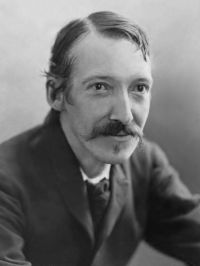
Robert Louis Stevenson

Robert Louis Stevenson

Summary

Portrait of Robert Louis Stevenson Robert Louis Stevenson 1911 Encyclopædia Britannica (1910)

This was the last public event of Béranger’s life. He continued to polish his songs in retirement, visited by nearly all the famous men of France. He numbered among his friends Chateaubriand, Thiers, Jacques Laffitte, Michelet, Lamennais, Mignet. Nothing could exceed the amiability of his private character; so poor a man has rarely been so rich in good actions; he was always ready to receive help from his friends when he was in need, and always forward to help others.
Source: Wikisource

Portrait of Robert Louis Stevenson Robert Louis Stevenson 1911 Encyclopædia Britannica (1910)

Next year he was elected to the Caveau Moderne, and his reputation as a song-writer began to spread. Manuscript copies of Les Gueux, Le Sénateur, above all, of Le Roi d’Yvetot, a satire against Napoleon, whom he was to magnify so much in the sequel, passed from hand to hand with acclamation. It was thus that all his best works went abroad; one man sang them to another over all the land of France. He was the only poet of modern times who could altogether have dispensed with printing.
Source: Wikisource

Portrait of Robert Louis Stevenson Robert Louis Stevenson 1911 Encyclopædia Britannica (1910)

He worked deliberately, never wrote more than fifteen songs a year and often less, and was so fastidious that he has not preserved a quarter of what he finished. “I am a good little bit of a poet,” he says himself, “clever in the craft, and a conscientious worker to whom old airs and a modest choice of subjects (le coin où je me suis confiné) have brought some success.”
Source: Wikisource

Get perspective with Kwize: daily news enlightened by great literature