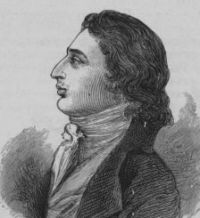
Robert Southey

Robert Southey

Summary

Portrait of Robert Southey Robert Southey Thalaba the Destroyer

They heard the heavy rain
Beat on the monument above.
In silence on Oneiza’s grave
The Father and the Husband sate.
The Cryer from the Minaret
Proclaimed the midnight hour;
“Now! now!” cried Thalaba,
And o’er the chamber of the tomb
There spread a lurid gleam
Like the reflection of a sulphur fire,
And in that hideous light
Oneiza stood before them, it was She,
Her very lineaments, and such as death
Had changed them, livid cheeks, and lips of blue.
But in her eyes there dwelt
Brightness more terrible
Than all the loathsomeness of death.
Source: Gutenberg

Portrait of Robert Southey Robert Southey Thalaba the Destroyer

No Iman o’er her perfumed corpse,
For her soul’s health intoned the prayer;
No column [163] raised by the way side
Implored the passing traveller
To say a requiem for the dead.
Thalaba laid her in the snow,
And took his weapons from the hearth,
And then once more the youth began
His weary way of solitude.
The breath of the East is in his face
And it drives the sleet and the snow.
The air is keen, the wind is keen,
His limbs are aching with the cold,
His eyes are aching [164] with the snow,
His very heart is cold,
His spirit chilled within him.
Source: Gutenberg

Portrait of Robert Southey Robert Southey Thalaba the Destroyer

Destitute of the horns of the bull, the hoofs of the horse, the tooth of the elephant, and the swiftness of the stag, how can the camel resist or avoid the attacks of the lion, the tyger, or even the wolf? To preserve the species therefore, Nature has concealed him in the depths of the vast deserts, where the want of vegetables can attract no game, and whence the want of game repels every voracious animal. Tyranny must have expelled man from the habitable parts of the earth, before the Camel could have lost his liberty.
Source: Gutenberg

Get perspective with Kwize: daily news enlightened by great literature