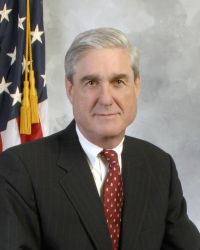
Robert Swan Mueller

Robert Swan Mueller

Summary

Portrait of Robert Swan Mueller Robert Swan Mueller U.S. v. Viktor Borisovich Netyksho… (2018)

All bitcoin transactions are added to a public ledger called the Blockchain, but the Blockchain identifies the parties to each transaction only by alpha-numeric identifiers known as bitcoin addresses. To further avoid creating a centralized paper trail of all of their purchases, the Conspirators purchased infrastructure using hundreds of different email accounts, in some cases using a new account for each purchase. The Conspirators used fictitious names and addresses in order to obscure their identities and their links to Russia and the Russian government.
Source: Wikisource

Portrait of Robert Swan Mueller Robert Swan Mueller U.S. v. Viktor Borisovich Netyksho… (2018)

The Conspirators funded the purchase of computer infrastructure for their hacking activity in part by "mining" bitcoin. Individuals and entities can mine bitcoin by allowing their computing power to be used to verify and record payments on the bitcoin public ledger, a service for which they are rewarded with freshly-minted bitcoin. The pool of bitcoin generated from the GRU's mining activity was used, for example, to pay a Romanian company to register the domain dcleaks.com through a payment processing company located in the United States.
Source: Wikisource

Portrait of Robert Swan Mueller Robert Swan Mueller U.S. v. Viktor Borisovich Netyksho… (2018)

On occasion, the Conspirators facilitated bitcoin payments using the same computers that they used to conduct their hacking activity, including to create and send test spearphishing emails. Additionally, one of these dedicated accounts was used by the Conspirators in or around 2015 to renew the registration of a domain (linuxkrnl.net) encoded in certain X-Agent malware installed on the DNC network.
Source: Wikisource

Get perspective with Kwize: daily news enlightened by great literature