Summary

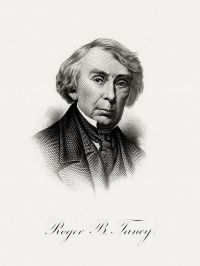
Portrait of Roger B. Taney Roger B. Taney Fleming v. Page — Opinion of the Court

A war, therefore, declared by Congress, can never be presumed to be waged for the purpose of conquest or the acquisition of territory; nor does the law declaring the war imply an authority to the President to enlarge the limits of the United States by subjugating the enemy's country. The United States, it is true, may extend its boundaries by conquest or treaty, and may demand the cession of territory as the condition of peace, in order to indemnify its citizens for the injuries they have suffered, or to reimburse the government for the expenses of the war.
Source: Wikisource

Portrait of Roger B. Taney Roger B. Taney Fleming v. Page — Opinion of the Court

When, therefore, a nation is unable to protect a portion of its territory from the superior force of an enemy, it loses its claim to the allegiance of those whom it fails to protect, and the conquered inhabitants pass under a temporary allegiance to the conqueror, and are bound by such laws, and such only, as he may choose to impose. The sovereignty of the nation which is thus unable to protect its territory is displaced, and that of the successful conqueror is substituted in its stead.
Source: Wikisource

Portrait of Roger B. Taney Roger B. Taney Fleming v. Page — Opinion of the Court

Thus, the President, in his message of December, 1846, says:-'By the law of nations a conquered territory is subject to be governed by the conqueror during his military possession, and until there is either a treaty of peace or he shall voluntarily withdraw from it. The old civil government being necessarily superseded, it is the right and duty of the conqueror to secure his conquest, and to provide for the maintenance of civil order and the rights of the inhabitants.
Source: Wikisource

Get perspective with Kwize: daily news enlightened by great literature