Summary

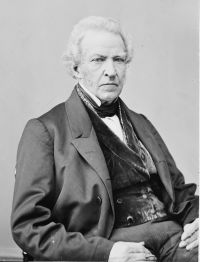
Portrait of James Moore Wayne James Moore Wayne Davis v. Parish of Concordia — Opinion of the Court

Finally, all of our proceedings respecting Louisiana have been done upon the principle, that the law of nations does not recognize in a nation ceding a territory the continuance of supreme power over it after the treaty has been signed, or any other exercise of sovereignty than that which is necessary for social order and for commercial purposes, and to keep the cession in an unaltered value, until a delivery of it has been made. Such being the extent of sovereignty under such circumstances, is not the grant of a perpetual ferry franchise attached to land as much prohibited as a grant of land?
Source: Wikisource

Portrait of James Moore Wayne James Moore Wayne Davis v. Parish of Concordia — Opinion of the Court

They prevent violence, are the best proof of a change of national character, preserve the commercial rights of the inhabitants, give to them in the eyes of all the world the new rights and relations they may have acquired, and establish, in the most notorious way it can be done, that the ceded territory has become a part of another dominion, partaking with it all those relations which nations can have with each other in commerce, in peace, and in war.
Source: Wikisource

Portrait of James Moore Wayne James Moore Wayne Davis v. Parish of Concordia — Opinion of the Court

Domingo should become valueless from the revolt of its slaves, he determined to avail himself of his power to gratify the wishes of the king and queen of Spain, by making the infant Duke of Parma a king in and over a part of Italy, with all royal rights and honors, and to get Louisiana in return. He meant to make it a permanent colony of France. He negotiated, as the treaties show, for an absolute retrocession of its people and territory, without other limitation than that which the law of nations secured to the former.
Source: Wikisource

Get perspective with Kwize: daily news enlightened by great literature