Summary

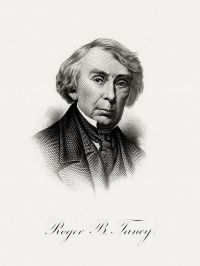
Portrait of Roger B. Taney Roger B. Taney Garcia v. Lee — Opinion of the Court

If he has been deceived, he has either deceived himself or been misled by the Spanish authorities; and has no right to complain of the conduct of the United States. And if either Spain or the United States intended to provide for these grants in Louisiana, by the treaty ceding the Floridas; it is impossible to believe that words would not have been used which clearly embraced them, and would have left no doubt as to the intention of the parties to the treaty.
Source: Wikisource

Portrait of Roger B. Taney Roger B. Taney Garcia v. Lee — Opinion of the Court

It is obvious that one nation cannot grant away the territory of another: and if a proposition so evident needed confirmation, it will be found in the case of Poole v. Fleeger, 11 Peters, 210. In that case, there had been a disputed boundary between two states; and the parties claimed the same land under grants from different states. The boundary line had been ascertained by compact between the states, after the grants were made.
Source: Wikisource

Portrait of Roger B. Taney Roger B. Taney Garcia v. Lee — Opinion of the Court

It is of such grants that the Court speak, when they declare them to be confirmed and protected by the true construction of the treaty; and that they do not need the aid of an act of congress to ratify and confirm the title of the purchaser. But they do not, in any part of the last mentioned case, apply this principle to grants made by Spain within the limits of Louisiana, in the territory which belonged to the United States according to its true boundary; and where Spain had no right to grant lands after the cession to France by the treaty of St.
Source: Wikisource

Get perspective with Kwize: daily news enlightened by great literature