Summary

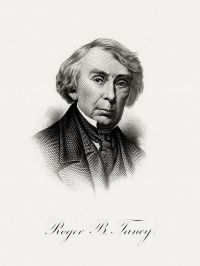
Portrait of Roger B. Taney Roger B. Taney Doe v. Braden — Opinion of the Court

Can it be pretended that the king alone, divorced as he was from the power to alienate any portion of the public domain, and, more than that, any 'portion of the Spanish territory,' or interfere with private property, whether in the title to it or the use of it, could effect that by his decree, which, if legitimately practicable at all by the state, could be effected by only the sovereignty of the country, and that formed of the cortes and himself?
Source: Wikisource

Portrait of Roger B. Taney Roger B. Taney Doe v. Braden — Opinion of the Court

And it would be impossible for the executive department of the government to conduct our foreign relations with any advantage to the country, and fulfil the duties which the Constitution has imposed upon it, if every court in the country was authorized to inquire and decide whether the person who ratified the treaty on behalf of a foreign nation had the power, by its constitution and laws, to make the engagements into which he entered.
Source: Wikisource

Portrait of Roger B. Taney Roger B. Taney Doe v. Braden — Opinion of the Court

Viewed as an opinion, (however it be a royal emanation,) it can have no effect. As testimony to explain, or rather to prevail in contradicting the treaty, it must likewise be unavailing. The declaration could legitimately serve but one purpose and as a memorial of fact; and that is to found a claim by the United States against Spain for indemnification, for parting with property which she taught the United States to believe would pass to her in the general cession of territory.
Source: Wikisource

Get perspective with Kwize: daily news enlightened by great literature