Summary

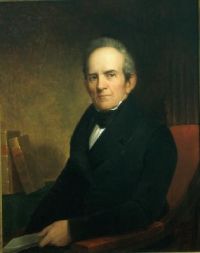
Portrait of Smith Thompson Smith Thompson United States v. Arredondo — Dissent

The ratification is nothing more than evidence of the authority under which the minister acted. A government is bound to perform and observe a treaty made by its minister, unless it can be made to appear that he has exceeded his authority. But a ratification is an acknowledgement that he was authorised to make the treaty; and if so, the nation is bound from the time the treaty is made and signed: and it is worthy of notice, that in all the acts of congress in relation to this treaty it is referred to as of the date of 22d February 1819, the time it was signed
Source: Wikisource

Portrait of Smith Thompson Smith Thompson United States v. Arredondo — Dissent

Any other construction would open the door to fraud and imposition. Suppose the eighth article, instead of the 24th of January 1818, had said, all grants of land made before the date of the treaty shall be valid; would that have made valid grants issued after the treaty was signed, and before ratified by the United States? No one, it is believed, would contend for this; and if for any purpose the date as fixed by the instrument would govern, it ought in all cases. The rule should be uniform, and not open to be changed for the purpose of meeting particular cases.
Source: Wikisource

Portrait of Smith Thompson Smith Thompson United States v. Arredondo — Dissent

There can be no doubt that such was the understanding of Don Onis and Mr De Neuville; and Mr Adams, in a letter to our minister in Spain, whilst the treaty was pending before the king for ratification, states that the reasons why the grants to the duke of Alagon and others were not excluded by name, were: 1, conformably to the desire of Mr Onis to save the honour of the king; and, 2, because from the despatches of Mr Erving it was supposed there were other grants of the same kind, and made under similar circumstances.
Source: Wikisource

Get perspective with Kwize: daily news enlightened by great literature