Summary

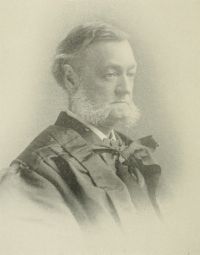
Portrait of George Shiras, Jr. George Shiras, Jr. United States v. Chaves — Opinion of the Court

Not only was there evidence of the existence of an original grant by the government of New Mexico, and of the loss of original records sufficient to justify the introduction of secondary evidence, but there is the weighty fact that for nearly 60 years the claimants and their ancestors have been in the undisturbed possession and enjoyment of this tract of land.
Source: Wikisource

Portrait of George Shiras, Jr. George Shiras, Jr. United States v. Chaves — Opinion of the Court

The counsel for the government, indeed, contend that the court of private land claims and this court have no power to presume a grant upon proof of long-continued possession only; that their power is confined to confirming grants lawfully and regularly derived from Spain and Mexico.
It is scarcely necessary for us to consider such a question, because, as we have seen, there is ample evidence from which to find that these settlers were put in juridical possession under a grant from the governor of New Mexico, who, under the laws then in force, had authority to make the grant.
Source: Wikisource

Portrait of George Shiras, Jr. George Shiras, Jr. United States v. Chaves — Opinion of the Court

Nothing, it is true, can be claimed by prescription which owes its origin to, and can only be had by, matter of record; but lapse of time, accompanied by acts done or other circumstances, may warrant the jury in presuming a grant or title by record. Thus, also, though lapse of time does not, of itself, furnish a conclusive bar to the title of the sovereign, agreeably to the maxim, 'Nullum tempus occurrit regi,' yet, if the adverse claim could have a legal commencement, juries are advised or instructed to presume such commencement, after many years of uninterrupted possession or enjoyment.
Source: Wikisource

Get perspective with Kwize: daily news enlightened by great literature