Summary

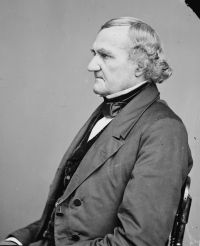
Portrait of John Catron John Catron Dred Scott v. Sandford — Separate Opinion (1857)

Congress cannot do indirectly what the Constitution prohibits directly. If the slaveholder is prohibited from going to the Territory with his slaves, who are parts of his family in name and in fact, it will follow that men owning lawful property in their own States, carrying with them the equality of their State to enjoy the common property, may be told, you cannot come here with your slaves, and he will be held out at the border.
Source: Wikisource

Portrait of John Catron John Catron Dred Scott v. Sandford — Separate Opinion (1857)

We must meet the question, whether Congress had the power to declare that a citizen of a State, carrying with him his equal rights, secured to him through his State, could be stripped of his goods and slaves, and be deprived of any participation in the common property? If this be the true meaning of the Constitution, equality of rights to enjoy a common country ( equal to a thousand miles square) may be cut off by a geographical line, and a great portion of our citizens excluded from it.
Source: Wikisource

Portrait of John Catron John Catron Dred Scott v. Sandford — Separate Opinion (1857)

That Congress has no authority to pass laws and bind men's rights beyond the powers conferred by the Constitution, is not open to controversy. But it is insisted that, by the Constitution, Congress has power to legislate for and govern the Territories of the United States, and that by force of the power to govern, laws could be enacted, prohibiting slavery in any portion of the Louisiana Territory
Source: Wikisource

Get perspective with Kwize: daily news enlightened by great literature