Summary

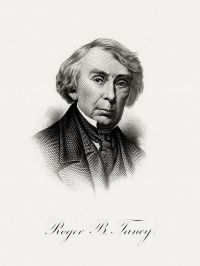
Portrait of Roger B. Taney Roger B. Taney Neil v. Ohio — Opinion of the Court

For in bidding for a contract upon a road so much travelled as this, the bidder would undoubtedly be greatly influenced by the advantages which a contract would give him in the conveyance of passengers, as his carriages, when carrying the mail, are entitled to go free. But if they, and they alone, are to be subjected to this burdensome and unequal toll, it is obvious that he must seek to reimburse himself, by enlarging his demand upon the government.
Source: Wikisource

Portrait of Roger B. Taney Roger B. Taney Neil v. Ohio — Opinion of the Court

And if instead of selecting the persons travelling in the mail-coaches, and laying the burden exclusively upon them, all passengers in vehicles of any kind had been equally charged, the real and substantial advantages and privileges to which the United States are entitled under the agreement would have been preserved, and the equality in relation to passengers originally existing between the mail-coaches and other carriages would not have been disturbed.
Source: Wikisource

Portrait of Roger B. Taney Roger B. Taney Neil v. Ohio — Opinion of the Court

Stokes and others, we have already said, that with an agreement like this before us between the United States and a state, we must look at the relation in which the parties stood to one another, as well as to the subject-matter of the contract, and the object which the high contracting parties intended to attain; and we must expound it upon principles of justice, so as to accomplish the purposes for which it was made, and not defeat their manifest intention, by a narrow and literal interpretation of its words.
Source: Wikisource

Get perspective with Kwize: daily news enlightened by great literature