Summary

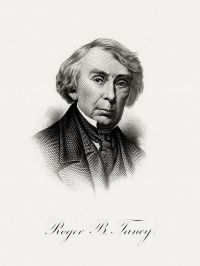
Portrait of Roger B. Taney Roger B. Taney United States v. Guillem — Opinion of the Court

If the argument has satisfied the court that Guillem's three thousand dollars, the earnings of his three years' labor, can in no proper sense of the words of the English language be called cargo, but are, and are to be considered as, the baggage and personal effects of Guillem, it is impossible to conceive how the conclusion is ever to be arrived at, that they are subject to condemnation because he embarked in a guilty vessel. In favor of neutrals, the laws of war are to be strictly construed. A neutral vessel, violating a blockade, and her cargo, are to be condemned as prize of war
Source: Wikisource

Portrait of Roger B. Taney Roger B. Taney United States v. Guillem — Opinion of the Court

The shipment of the money could give no aid or comfort to the enemy. And in taking his passage in the Jeune Nelly, his intention, as far as it can be ascertained from the testimony, was merely to return to his own country, in a mode better suited to his humble circumstances and more convenient to his family, than by passing through the ships of war. In the opinion of the court, the money he took with him was not liable to condemnation on account of the guilt of the vessel, and the decree of the Circuit Court is therefore affirmed.
Source: Wikisource

Portrait of Roger B. Taney Roger B. Taney United States v. Guillem — Opinion of the Court

And yet, in the case of a cargo shipped for the purposes of commerce, the breach of blockade is almost always committed by the vessel for the benefit of the cargo, and to carry out some mercantile speculation injurious to the rights of the belligerent nation whose ships are blockading the port. The case before us is a stronger one in favor of the claimant than that of the innocent owner of a cargo.
Source: Wikisource

Get perspective with Kwize: daily news enlightened by great literature