Summary

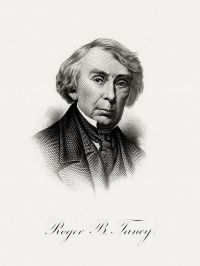
Portrait of Roger B. Taney Roger B. Taney Wilson v. Barnum — Opinion of the Court

The plaintiff, who claims as assignee of what is generally called the Woodworth patent, filed a bill in equity, praying an injunction against the defendant to restrain him from using a certain machine, in which, as the complainant charged, boards were planed, tongued, and grooved in the same manner as in the Woodworth machine; the machine of the defendant operating in the same way in every respect as the one for which the complainant held the patent.
Source: Wikisource

Portrait of Roger B. Taney Roger B. Taney Wilson v. Barnum — Opinion of the Court

And it would be utterly inconsistent with the well known and established proceedings of courts of equity, as well as courts of common law, to take out of a case during its progress a single question of fact, and send it here with the evidence upon that point only, for the final decision of this court. In the case before us, a great number of facts must be ascertained and determined from the evidence, before a final opinion could be formed upon the question certified.
Source: Wikisource

Portrait of Roger B. Taney Roger B. Taney Wilson v. Barnum — Opinion of the Court

On the final hearing of the case, the judges of the Circuit Court differed in opinion on the following question: 'Whether, according to the true construction of the Woodworth patent, as amended, the machines made or used by the defendant at the time of filing the bill, or either of them singly, do or do not infringe the said amended letters patent?'
The question thus certified is one of fact, and has been discussed as such in the arguments offered on both sides. It is a question as to the substantial identity of the two machines. And its decisions must depend upon the testimony of witnesses
Source: Wikisource

Get perspective with Kwize: daily news enlightened by great literature