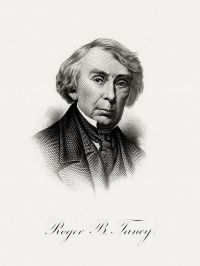
 Roger B. Taney,
Wood v. Underhill — Opinion of the Court
Roger B. Taney,
Wood v. Underhill — Opinion of the Court
“ It may be, indeed, that the qualities of clay generally differ so widely that the specification of the proportions stated in this case is of no value; and that the improvement cannot be used with advantage in any case, or with any clay, without first ascertaining by experiment the proportion to be employed. If that be the case, then the invention is not patentable. Because, by the terms of the act of Congress, the inventor is not entitled to a patent unless his description is so full, clear, and exact as to enable any one skilled in the art to compound and use it. ”
