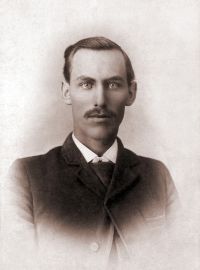
Ross Winn

Ross Winn

Summary

Portrait of Ross Winn Ross Winn The Man On Horseback (1903)

Vain, vain is the dream of him who dreams of universal peace. In the very symphony of the Universe the tumultous strains are keyed to the measure of battle, and the supreme triumphant note is war. Here, now, we have a great genius, Tolstoy, a philosopher with the heart of a child, dreaming the grandly beautiful dream of universal peace. And here, upon a ballot-reared and bayonet-propped throne is a puny pygmy named Roosevelt, the potency of whose pen is a thousandfold more powerful for peace or war than a hundred volumes of Tolstoy's genius. And is Roosevelt therefore greater than Tolstoy?
Source: Wikisource

Portrait of Ross Winn Ross Winn The Man On Horseback (1903)

There is not a "wrong" named in the conventional code that does not immediately become "right" the moment it is sanctioned by a pin-head officialdom. There is no crime so dark and damnable that it cannot by transformed into the sanctified and glorified achievement of a national virtue, if it be but covered by the painted folds of a national flag. A man who should take by armed force his neighbor's farm, butcher the helpless victim for defending his property, and apply the torch to everything in sight, would be denominated a brutal criminal, a hyena of infamy, a fiend of wanton wickedness.
Source: Wikisource

Portrait of Ross Winn Ross Winn The Man On Horseback (1903)

The world worships the warrior and crowns with its veneration the victorious conqueror, tho his path to fame and glory be drenched with blood and tears. The shadow of the sword lies across every page of human history, and the bayonet's bright gleam and the cannon's red glare have lighted the path of national destiny from the Babylonian empire to the American republic.
Source: Wikisource

Get perspective with Kwize: daily news enlightened by great literature