Summary

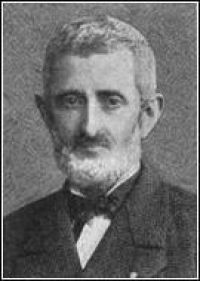
Portrait of Elijah Benamozegh Elijah Benamozegh Jewish and Christian Ethics — Chapter VI (1873)

In vain would Christianity lift itself into the regions of an almost mystical morality; it is on the wings of Hebraism that it soars to these heights. In vain does it assert "God is Charity,"—this sublime saying that deeply stirred the whole Pagan world lapped in sensuality—it got this from Judaism. "God is Charity, God is Love," says the Cabala, and also the Midrasch. And what have the doctors made of the Mosaic precept, "Love thy neighbor as thyself?"
Source: Wikisource

Portrait of Elijah Benamozegh Elijah Benamozegh Jewish and Christian Ethics — Chapter VI (1873)

Not only is Charity carefully distinguished from simple alms- giving, and from every other good work, but it is declared far superior to all special benevolence, to Tzedaka, for instance, which it surpasses, they add, in many respects; for the one has to do but with things exterior to man; the other, with man's whole nature, body and soul; the one serves the living only; the other, the dead as well; the one concerns itself for the poor only; the other, for the rich also; for with them, too, Charity finds wounds to heal, tears to dry, griefs to ease.
Source: Wikisource

Portrait of Elijah Benamozegh Elijah Benamozegh Jewish and Christian Ethics — Chapter VI (1873)

While Judaism never omits any of the lower steps that lead to universal charity, but lets the individual, the family, the city, the country, each play its proper part, Christianity leaps over all these, burying them in the abstract gulph it calls the world, humanity, or the Church. Let it, then, be no longer asserted that Christianity has taught men greater charity than Judaism.
Source: Wikisource

Get perspective with Kwize: daily news enlightened by great literature