Summary

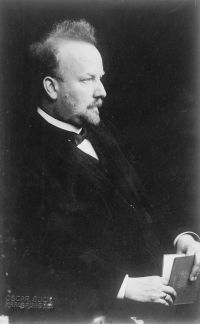
Portrait of Arthur Drews Arthur Drews The Witnesses to the Historicity of Jesus… (1912)

Imagine what is required to make a man accept as a supernatural being, as God's own son, one whom he had shortly before regarded as an impostor, and who had died on the cross as a criminal a few years before, even if he now acknowledges his innocence and his high character as an anointed of God. A belief in the resurrection and transfigured life of Jesus could not accomplish this, any more than it led the first disciples to deify the master, because it was believed that Enoch, Moses, and Elias also had been taken up into heaven
Source: Wikisource

Portrait of Arthur Drews Arthur Drews The Witnesses to the Historicity of Jesus… (1912)

Acts, in fact, knows nothing of a fundamental difference between Paul and the rest of the apostles in regard to their attitude towards Judaism, and even the account of his travels—the part of Acts which has the strongest claim to be regarded as genuine—is silent as to any difference of mind between Paul and the first disciples of Jesus, and does not betray by a single syllable that Paul has promulgated a gospel far in advance of that of the original apostles and surpassing theirs both in the richness of its contents and the depth of its thoughts.
Source: Wikisource

Portrait of Arthur Drews Arthur Drews The Witnesses to the Historicity of Jesus… (1912)

It is immaterial to us whether there was one author, or whether, as the Dutch have tried to show, several co-operated in producing them; whether they are original, or are merely elaborations of older letters; whether in substance they go back to an apostle Paul who preached the gospel to the Gentiles about the middle of the first century, founded communities, and was to some extent opposed to the “original apostles” at Jerusalem, or whether they are altogether products of the first quarter of the second century, and the figure of the apostle is a piece of fiction.
Source: Wikisource

Get perspective with Kwize: daily news enlightened by great literature