Summary

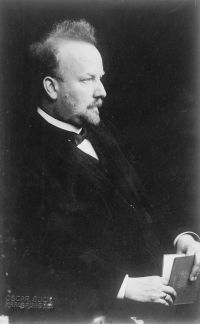
Portrait of Arthur Drews Arthur Drews The Witnesses to the Historicity of Jesus… (1912)

It is sheer theological prejudice and perversion of history to say that Jesus was “the first” to preach love of enemies, that men owe to his example alone that love of one's neighbour has become the supreme principle of moral conduct, as Weinel claims. As if the Stoics had not preached universal love of mankind long before the time of Jesus; not merely as a passive endurance, but as an active interest in the lot of others and disinterested helpfulness on the basis of descent from a common divine Father and as members of a common humanity!
Source: Wikisource

Portrait of Arthur Drews Arthur Drews The Witnesses to the Historicity of Jesus… (1912)

Sayings of Jesus on the Weak and Lowly.—Among the finest characteristics of Jesus we must place, it is said, his relation to the lowly, his love of children, his sympathy with the least conspicuous objects in nature. It is assuredly a touching and amiable feature in a man like Jesus to stoop so lovingly to the weakest of the weak, to look with tender eye on the flowers of the field and the birds of heaven, to contrast their indifference to the future with man's constant concern about his maintenance (Matthew vi, 26) .
Source: Wikisource

Portrait of Arthur Drews Arthur Drews The Witnesses to the Historicity of Jesus… (1912)

As for man, his days are as grass; as a flower of the field, so he flourisheth. For the wind passeth over it, and it is gone; and the place thereof shall know it no more. But the mercy of the Lord is from everlasting to everlasting upon them that fear him, and his righteousness unto children's children. As regards the relation of God the Father to the individual soul, this “religious individualism,” as it is called, is not peculiar to Jesus or Christianity, but a fundamental feature of all deeper religions, and especially of the mystery-cults.
Source: Wikisource

Get perspective with Kwize: daily news enlightened by great literature