Summary

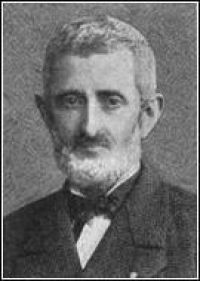
Portrait of Elijah Benamozegh Elijah Benamozegh Jewish and Christian Ethics — Chapter VII (1873)

We have seen before that Christianity had to seat itself upon the empty throne, and to transfer there all its religious character and aspirations, and, as it had no political system, to risk the fatal blending of the spiritual with the temporal—of faith with law, of charity with justice, of the interior court with the exterior, of remorse with policemen, of hell with the scaffold—of which its history, alas! gives us the painful spectacle.
Source: Wikisource

Portrait of Elijah Benamozegh Elijah Benamozegh Jewish and Christian Ethics — Chapter VII (1873)

And why are those Canaanites driven before Israel, from their land? It is here that the God of Moses reveals himself as the just God, the God of all men, dealing to the Jew the same justice as to the Canaanite—a doctrine unheard of, incomprehensible, in those early days, and which Judaism alone has made the world understand. Take care, says Moses, that you be not guilty of the same sins and corruptions as are those nations whom you are about to drive out. For, deceive not yourselves, it is neither your virtue nor equity of claim, that gives you the inheritance
Source: Wikisource

Portrait of Elijah Benamozegh Elijah Benamozegh Jewish and Christian Ethics — Chapter VII (1873)

Should a good thought, a noble doctrine then, have the same value coming from the Christian as from the Jew? Assuredly not. If historical criticism is just, it must admit that whenever Hebrew charity disengages itself from a thousand obstacles, a thousand adverse sentiments, it rises spontaneously to those heights where all men appear equal. For the doctrine itself is too old, too rooted in the hearts of men to disown it, and men are too loyal, too generous to do so.
Source: Wikisource

Get perspective with Kwize: daily news enlightened by great literature