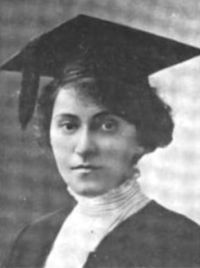
Ruth Edna Kelley

Ruth Edna Kelley

Summary

Portrait of Ruth Edna Kelley Ruth Edna Kelley The Book of Hallowe'en — XII. (1919)

The Otherworlds of the Teutons were Valhalla, the abode of the
heroes whom death had found on the battlefield, and Niflheim, "the
misty realm," secure from the cold outside, ruled over by Queen
Hel. Valkyries, warlike women who rode through the air on swift
horses, seized the heroes from the field of slaughter, and took
them to the halls of Valhalla, where they enjoyed daily combats,
long feasts, and drinking-bouts, music and story-telling.
Source: Wikisource

Portrait of Ruth Edna Kelley Ruth Edna Kelley The Book of Hallowe'en — XII. (1919)

Like the Greeks and Romans, the Teutons had twelve gods and
goddesses, among whom were Odin or Wotan, the king, and his wife
Freya, queen of beauty and love. Idun guarded the apples of
immortality, which the gods ate to keep them eternally young. The
chief difference in Teutonic mythology was the presence of an evil
god, Loki. Like Vulcan, Loki was a god of fire, like him, Loki was
lame because he had been cast out of heaven.
Source: Wikisource

Portrait of Ruth Edna Kelley Ruth Edna Kelley The Book of Hallowe'en — XII. (1919)

Loki knew this, and gave a twig of mistletoe to Baldur's blind
brother, Hodur, and Hodur cast it at Baldur and "unwitting slew"
him. Vali, a younger brother of Baldur, avenged him by killing
Hodur. Hodur is darkness and Baldur light; they are brothers; the
light falls a victim to blind darkness, who reigns until a younger
brother, the sun of the next day, rises to slay him in turn.
Below these gods, all nature was peopled with divinities.
Source: Wikisource

Get perspective with Kwize: daily news enlightened by great literature