Summary

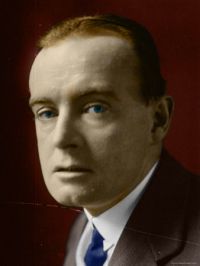
Portrait of Saki Saki Beasts and Super-Beasts — The Philanthropist and the Happy Cat (1914)

Work girls, shop assistants and so forth, the class that have neither the happy-go-lucky freedom of the poor nor the leisured freedom of the rich, came specially within the range of her sympathy. It was sad to think that there were young people who, after a long day’s work, had to sit alone in chill, dreary bedrooms because they could not afford the price of a cup of coffee and a sandwich in a restaurant, still less a shilling for a theatre gallery.
Jocantha’s mind was still dwelling on this theme when she started forth on an afternoon campaign of desultory shopping
Source: Wikisource

Portrait of Saki Saki Beasts and Super-Beasts — The Philanthropist and the Happy Cat (1914)

He seems the incarnation of everything soft and silky and velvety, without a sharp edge in his composition, a dreamer whose philosophy is sleep and let sleep; and then, as evening draws on, he goes out into the garden with a red glint in his eyes and slays a drowsy sparrow.”
“As every pair of sparrows hatches out ten or more young ones in the year, while their food supply remains stationary, it is just as well that the Attabs of the community should have that idea of how to pass an amusing afternoon,” said Gregory.
Source: Wikisource

Portrait of Saki Saki Beasts and Super-Beasts — The Philanthropist and the Happy Cat (1914)

On further reflection she decided that it might be better to get only one ticket and give it to some lonely-looking girl sitting eating her frugal meal by herself; the girl might scrape acquaintance with her next-seat neighbour at the theatre and lay the foundations of a lasting friendship.
With the Fairy Godmother impulse strong upon her, Jocantha marched into a ticket agency and selected with immense care an upper circle seat for the “Yellow Peacock,” a play that was attracting a considerable amount of discussion and criticism.
Source: Wikisource

Get perspective with Kwize: daily news enlightened by great literature