Summary

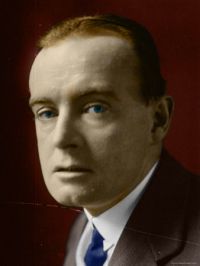
Portrait of Saki Saki Beasts and Super-Beasts — The Yarkand Manner (1914)

No one is a hero to one’s own office-boy, and he evidently considered that a quarter of a million was an unwarrantable outlay for such a doubtfully advantageous object as the repatriation of an errant newspaper staff. So he drew the editorial and other salaries, forged what signatures were necessary, engaged new reporters, did what sub-editing he could, and made as much use as possible of the large accumulation of special articles that was held in reserve for emergencies. The articles on foreign affairs were entirely his own composition.
Source: Wikisource

Portrait of Saki Saki Beasts and Super-Beasts — The Yarkand Manner (1914)

At the door leading to the editorial department the way was barred by a nervous but defiant office-boy.
“‘You can’t see the editor nor any of the staff,’ he announced.
“‘We insist on seeing the editor or some responsible person,’ said the Prime Minister, and the deputation forced its way in. The boy had spoken truly; there was no one to be seen. In the whole suite of rooms there was no sign of human life.
Source: Wikisource

Portrait of Saki Saki Beasts and Super-Beasts — The Yarkand Manner (1914)

Whatever else the Daily Intelligencer had learned in the East, it had not acquired the art of diplomatic ambiguity. The man in the street enjoyed the articles and bought the paper as he had never bought it before; the men in Downing Street took a different view. The Foreign Secretary, hitherto accounted a rather reticent man, became positively garrulous in the course of perpetually disavowing the sentiments expressed in the Daily Intelligencer’s leaders
Source: Wikisource

Get perspective with Kwize: daily news enlightened by great literature