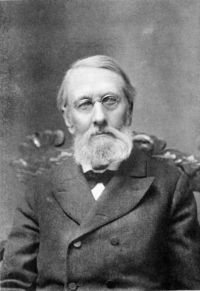
Samuel Asahel Clarke

Samuel Asahel Clarke

../../ (1880)

Summary

Portrait of Samuel Asahel Clarke Samuel Asahel Clarke ../../ (1880)

There was no living man to plead for Oregon and tell the truth fearlessly, until, "in the dead of winter, an awkward, tall, spare-visaged, vigorous, offhand sort of a man appeared at the Department in his mountain traveling garb, consisting of a dark-colored blanket coat and buckskin pants, showing that to keep himself from freezing he had been compelled to lie down close to his camp-fire while in the mountains, and on his way to Washington he had not stopped for a moment, but pushed on with a vigor and energy peculiarly his own."
Source: Wikisource

Portrait of Samuel Asahel Clarke Samuel Asahel Clarke ../../ (1880)

Whitman could not have lived to see this day, and receive from a grateful country the plaudits he so well earned as a patriotic American. It is mournful to remember his fate; but it is better to have so labored and accomplished, even if to meet so terrible a death, than to have expended a lifetime among the world's older civilization, toiling in monotonous ways of peace and profit, without having done any deed to rival the heroes of all time or left any remembrance of great endeavor.
Source: Wikisource

Portrait of Samuel Asahel Clarke Samuel Asahel Clarke ../../ (1880)

Here were hunters, trappers, and traders, with their Indian wives; men who had strayed off from civilization, and were astonished to be brought face to face, so many thousand miles from home, with men and women of culture, who were carrying the older civilization across the continent. Here were the camps, store, and equipments of the American Fur Company, and beyond them, for six miles up the stream, were the camp-fires and lodges of Bannacks, Nez Perces, and Flatheads, the homes of the last named a month's journey to the northward.
Source: Wikisource

Get perspective with Kwize: daily news enlightened by great literature