Summary

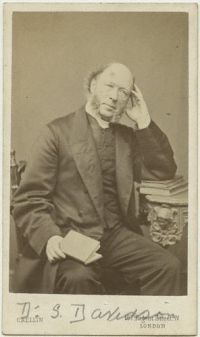
Portrait of Samuel Davidson Samuel Davidson Encyclopædia Britannica, Ninth Edition (1878)

Tradition had shaped and established its condition. General usage gave it a permanency which it was not easy to disturb. The history is mainly an objective one. Uncritical at its commencement, it was equally so in the two centuries which have just been considered.
The history of the canon in the Syrian church cannot be traced with much exactness. The Peshito version had only the Hebrew canonical books at first; the apocryphal were added afterwards. In the New Testament it wanted four of the catholic epistles and the Apocalypse.
Source: Wikisource

Portrait of Samuel Davidson Samuel Davidson Encyclopædia Britannica, Ninth Edition (1878)

One thing is pretty clear, that a polity is not represented by either of the two beasts in the Apocalypse, or by Paul s man of sin. It is remarkable how long the legend about Nero s revival continued, and how widely diffused it be came, though his body was buried publicly at Rome. Not till the 5th century did it become extinct.
The author of John s first epistle has a more general and spiritual conception of antichrist, partly in consequence of the Alexandrian philosophy which had leavened thought in Asia Minor, as is perceptible in the fourth gospel.
Source: Wikisource

Portrait of Samuel Davidson Samuel Davidson Encyclopædia Britannica, Ninth Edition (1878)

The exact principles that guided the formation of a canon in the earliest centuries cannot be discovered. Definite grounds for the reception or rejection of books were not very clearly apprehended. The choice was de termined by various circumstances, of which apostolic origin was the chief, though this itself was insufficiently attested, for, if it be asked whether all the New Testament writings proceeded from the authors whose names they bear, criticism cannot reply in the affirmative.
Source: Wikisource

Get perspective with Kwize: daily news enlightened by great literature