Summary

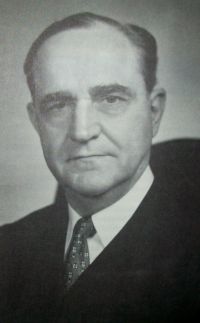
Portrait of Sherman Minton Sherman Minton Lewis v. United States (348 U.S. 419…

If petitioner desires to engage in an unlawful business, he does so only on his own volition. The fact that he may elect to pay the tax and make the prescribed disclosures required by the Act is a matter of his choice. There is nothing compulsory about it, and, consequently, there is nothing violative of the Fifth Amendment. If he does not pay the occupational tax, proceeds to accept wagers, and is prosecuted therefor, as in this case, he cannot be compelled to testify and may claim his privilege.
Source: Wikisource

Portrait of Sherman Minton Sherman Minton Lewis v. United States (348 U.S. 419…

The Fifth Amendment provides that one cannot be compelled, in a criminal case, to be a witness against himself. It is a shield that prevents one from being convicted out of his own mouth by anything short of voluntary statements.
Petitioner maintains that the taxes imposed are retrospective in application. It is argued that he must be liable for the tax under subchapter A in the sense that he must have already wagered before he is required to take out the occupational tax, and that to require him to do so compels admission that he has gambled.
Source: Wikisource

Get perspective with Kwize: daily news enlightened by great literature