Summary

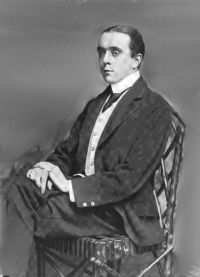
Portrait of Sir Max Beerbohm Sir Max Beerbohm Zuleika Dobson; Or, An Oxford Love Story (1922)

To the Duke, Nellie O’Mora had never been a very vital figure. He had often repeated the legend of her. But, having never known what love was, he could not imagine her rapture or her anguish. Himself the quarry of all Mayfair’s wise virgins, he had always—so far as he thought of the matter at all—suspected that Nellie’s death was due to thwarted ambition. But to-night, while he told Oover about her, he could see into her soul. Nor did he pity her. She had loved. She had known the one thing worth living for—and dying for.
Source: Gutenberg

Portrait of Sir Max Beerbohm Sir Max Beerbohm Zuleika Dobson; Or, An Oxford Love Story (1922)

ZULEIKA DOBSON
I
That old bell, presage of a train, had just sounded through Oxford station; and the undergraduates who were waiting there, gay figures in tweed or flannel, moved to the margin of the platform and gazed idly up the line. Young and careless, in the glow of the afternoon sunshine, they struck a sharp note of incongruity with the worn boards they stood on, with the fading signals and grey eternal walls of that antique station, which, familiar to them and insignificant, does yet whisper to the tourist the last enchantments of the Middle Age.
Source: Gutenberg

Portrait of Sir Max Beerbohm Sir Max Beerbohm Zuleika Dobson; Or, An Oxford Love Story (1922)

Oxford! The very sight of the word printed, or sound of it spoken, is fraught for me with most actual magic.
And on that moonlit night when I floated among the vapours of these meadows, myself less than a vapour, I knew and loved Oxford as never before, as never since. Yonder, in the Colleges, was the fume and fret of tragedy—Love as Death’s decoy, and Youth following her. What then? Not Oxford was menaced. Come what might, not a stone of Oxford’s walls would be loosened, nor a wreath of her vapours be undone, nor lost a breath of her sacred spirit.
Source: Gutenberg

Get perspective with Kwize: daily news enlightened by great literature