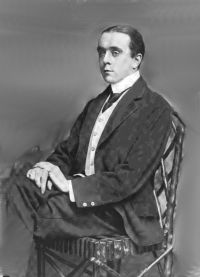
Max Beerbohm

Max Beerbohm

Summary

Portrait of Max Beerbohm Max Beerbohm Zuleika Dobson — Chapter 7 (1911)

He had never been conscious of public spirit. He had lived for himself alone. Love had come to him yesternight, and to-day had waked in him a sympathy with mankind. It was a fine thing to be a saviour. It was splendid to be human. He looked quickly round to her who had wrought this change in him.
But the loveliest face in all the world will not please you if you see it suddenly, eye to eye, at a distance of half an inch from your own. It was thus that the Duke saw Zuleika's: a monstrous deliquium a-glare.
Source: Wikisource

Portrait of Max Beerbohm Max Beerbohm Zuleika Dobson — Chapter 7 (1911)

I remain their ideal, and all that, of course. They cherish the thought of me. They see the world in terms of me. But I am an inspiration, not an obsession; a glow, not a blight."
"You don't believe in the love that corrodes, the love that ruins?"
"No," laughed Zuleika.
"You have never dipped into the Greek pastoral poets, nor sampled the Elizabethan sonneteers?"
"No, never. You will think me lamentably crude: my experience of life has been drawn from life itself."
Source: Wikisource

Portrait of Max Beerbohm Max Beerbohm Zuleika Dobson — Chapter 7 (1911)

Her grip of his arm tightened. Only by breaking her wrist could he have freed himself. A moment ago, she had been in the seventh-heaven . . . Men were supposed to have died for love of her. It had never been proved. There had always been something—card-debts, ill-health, what not—to account for the tragedy. No man, to the best of her recollection, had ever hinted that he was going to die for her. Never, assuredly, had she seen the deed done. And then came he, the first man she had loved, going to die here, before her eyes, because she no longer loved him.
Source: Wikisource

Get perspective with Kwize: daily news enlightened by great literature