Summary

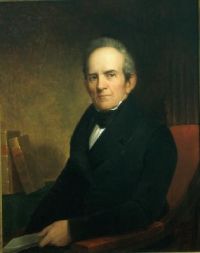
Portrait of Smith Thompson Smith Thompson Bend v. Hoyt — Dissent

Entries at the customhouse are usually made by clerks. But if no mistake made by a clerk can be corrected, every merchant will be obliged to submit in silence to all losses occasioned by mistakes, or attend in person to make his entries; which will be entirely changing the course of business. But suppose the plaintiff himself had made the mistake; can it be that it is beyond the reach of the law to correct such mistakes. The rule now laid down by the Court would equally extend to such a case. If there are any grounds whatever to suspect fraud or imposition, it is open to inquiry.
Source: Wikisource

Portrait of Smith Thompson Smith Thompson Bend v. Hoyt — Dissent

Lord Mansfield there said the rule had always been, that if a man has paid what the law would not have compelled him to pay, but what in equity and conscience he ought to pay, he cannot recover it back in an action for money had and received: but where money is paid under a mistake, which there was no ground to claim in conscience, the party may recover it back again in this kind of action.
Source: Wikisource

Portrait of Smith Thompson Smith Thompson Bend v. Hoyt — Dissent

If this be the true rule, of which I think there can be no doubt, the plaintiff has a right to recover back the money in this case. It is fully proved that it was included in his bond by mistake, and was held by the collector, without any right in law or conscience to retain it; and payment of the bond was exacted under the penalty of forfeiture of credit at the customhouse. If an action against the collector cannot be maintained to recover back money paid under such circumstances, it is difficult to conceive a case that would sustain an action.
Source: Wikisource

Get perspective with Kwize: daily news enlightened by great literature