Summary

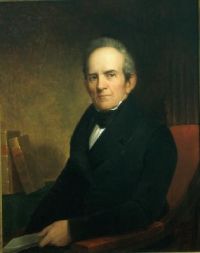
Portrait of Smith Thompson Smith Thompson M'Cutchen v. Marshall — Opinion of the Court

Emancipation, therefore, cannot take place consistently with these acts, by mere testamentary regulation.
It would, at first view, seem to be strange, that a man could not renounce any right possessed by him. But slaves are a species of property, the right to which the policy of society forbids to be relinquished, without the sanction of the public authorities. Their assent, in the present instance, was not given during the life time of the testator
Source: Wikisource

Portrait of Smith Thompson Smith Thompson M'Cutchen v. Marshall — Opinion of the Court

By the laws of Tennessee, and the practice under them, petitions for emancipation are always preferred by the owners of slaves, who are desirous of conferring on them freedom; and the only object of such petitions is to obtain the public sanction, and give the requisite guarantee that the slaves, if superannuated, shall not become a charge to the community. And the county court, which is the public organ for this purpose, has to judge of the policy and propriety, in a moral point of view, of increasing the number of this species of population.
Source: Wikisource

Get perspective with Kwize: daily news enlightened by great literature