Summary

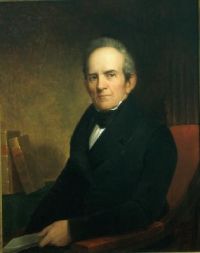
Portrait of Smith Thompson Smith Thompson Runyan v. Lessee of Coster — Opinion of the Court

That corporations created by statute must depend for their powers and the mode of exercising them, upon the true construction of the statute. A corporation can have no legal existence out of the sovereignty by which it is created; as it exists only in contemplation of law, and by force of the law: and that when that law ceases to operate, and is no longer obligatory, the corporation can have no existence.
Source: Wikisource

Portrait of Smith Thompson Smith Thompson Runyan v. Lessee of Coster — Opinion of the Court

Every power, however, which a corporation exercises in another state, depends for its validity upon the laws of the sovereignty in which it is exercised; and a corporation can make no valid contract, without the sanction, express or implied, of such sovereignty: unless a case should be presented in which the right claimed by the corporation should appear to be secured by the Constitution of the United States.
Source: Wikisource

Portrait of Smith Thompson Smith Thompson Runyan v. Lessee of Coster — Opinion of the Court

The corporation must show that the law of its creation gave it authority to make such contracts. Yet, as in the case of a natural person, it is not necessary that it should actually exist in the sovereignty in which the contract is made. It is sufficient that its existence as an artificial person in the state of its creation, is acknowledged and recognised by the state or nation were the dealing takes place
Source: Wikisource

Get perspective with Kwize: daily news enlightened by great literature