Summary

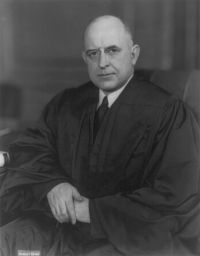
Portrait of Stanley Forman Reed Stanley Forman Reed Adamson v. California — Opinion of the Court

When evidence is before a jury that threatens conviction, it does not seem unfair to require him to choose between leaving the adverse evidence unexplained and subjecting himself to impeachment through disclosure of former crimes. Indeed, this is a dilemma with which any defendant may be faced. If facts adverse to the defendant are proven by the prosecution, there may be no way to explain them favorably to the accused except by a witness who may be vulnerable to impeachment on cross-examination.
Source: Wikisource

Portrait of Stanley Forman Reed Stanley Forman Reed Adamson v. California — Opinion of the Court

California has prescribed a method for advising the jury in the search for truth. However sound may be the legislative conclusion that an accused should not be compelled in any criminal case to be a witness against himself, we see no reason why comment should not be made upon his silence. It seems quite natural that, when a defendant has opportunity to deny or explain facts and determines not to do so, the prosecution should bring out the strength of the evidence by commenting upon defendant's failure to explain or deny it.
Source: Wikisource

Portrait of Stanley Forman Reed Stanley Forman Reed Adamson v. California — Opinion of the Court

For a state to require testimony from an accused is not necessarily a breach of a state's obligation to give a fair trial. Therefore, we must examine the effect of the California law applied in this trial to see whether the comment on failure to testify violates the protection against state action that the due process clause does grant to an accused.
Source: Wikisource

Get perspective with Kwize: daily news enlightened by great literature