Summary

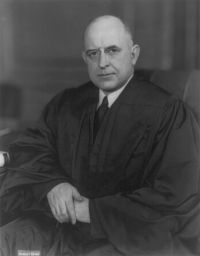
Portrait of Stanley Forman Reed Stanley Forman Reed Helvering ' v. Enright's Estate…

The requirement to account for a distributive share, although the share is actually not distributed, is not a requirement to account for partnership income on an accrual basis. Since a partner's return of his partnership earnings would vary, dependent upon whether the partnership used the cash or accrual method of accounting, we do not agree with respondent's suggestion.
Source: Wikisource

Portrait of Stanley Forman Reed Stanley Forman Reed Helvering ' v. Enright's Estate…

Accounts kept consistently on a basis other than cash receipts might treat accruals quite differently from a method designed to reflect the earned income of a cash receipt taxpayer. Accruals here are to be construed in furtherance of the intent of Congress to cover into income the assets of decedents, earned during their life and unreported as income, which on a cash return, would appear in the estate returns. Congress sought a fair reflection of income. [23]
Accrued income obviously connotes more than interest.
Source: Wikisource

Portrait of Stanley Forman Reed Stanley Forman Reed Helvering ' v. Enright's Estate…

Assuming at this point that the unfinished business is accruable, this accounting as of the time of death would show the partnership income for the taxable year of the partnership. [10] As the net income of the partnership is to be accounted for in the deceased partner's return, without consideration of the period over which the income is earned, the fact that the payment for the unfinished business will not be collected until another taxable year is immaterial.
Source: Wikisource

Get perspective with Kwize: daily news enlightened by great literature