Summary

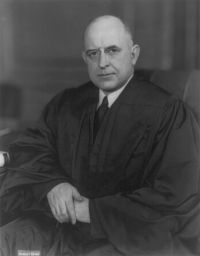
Portrait of Stanley Forman Reed Stanley Forman Reed Johnson v. Muelberger — Opinion of the Court

It is clear from the foregoing that, under our decisions, a state by virtue of the clause must give full faith and credit to an out-of-state divorce by barring either party to that divorce who has been personally served or who has entered a personal appearance from collaterally attacking the decree. Such an attack is barred where the party attacking would not be permitted to make a collateral attack in the courts of the granting state.
Source: Wikisource

Portrait of Stanley Forman Reed Stanley Forman Reed Johnson v. Muelberger — Opinion of the Court

Muelberger to attack the Florida decree of divorce between her father and his second wife as beyond the jurisdiction of the rendering court. In that case New York cannot permit such an attack by reason of the Full Faith and Credit Clause. When a divorce cannot be attacked for lack of jurisdiction by parties actually before the court or strangers in the rendering state, it cannot be attacked by them anywhere in the Union.
Source: Wikisource

Portrait of Stanley Forman Reed Stanley Forman Reed Johnson v. Muelberger — Opinion of the Court

In two cases, Williams I and II, 317 U.S. 287, 63 S.Ct. 207, 87 L.Ed. 279, and 325 U.S. 226, 65 S.Ct. 1092, 89 L.Ed. 1577, we held that domicile of one party to a divorce creates an adequate relationship with the state to justify its exercise of power over the marital relation, 317 U.S. at page 298, 63 S.Ct. at page 213; 325 U.S. at page 235, 65 S.Ct. at page 1097. The later Williams case left a sister state free to determine whether there was domicile of one party in an 'ex parte' proceeding so as to give the court jurisdiction to enter a decree.
Source: Wikisource

Get perspective with Kwize: daily news enlightened by great literature