Summary

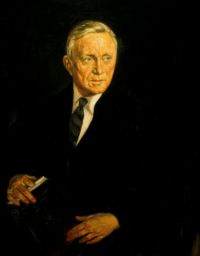
Portrait of William O. Douglas William O. Douglas Estin v. Estin — Opinion of the Court

The State should have the power to guard its interest in them by changing or altering their marital status and by protecting them in that changed status throughout the farthest reaches of the nation. For a person domiciled in one State should not be allowed to suffer the penalties of bigamy for living outside the State with the only one which the State of his domicile recognizes as his lawful wife. And children born of the only marriage which is lawful in the State of his domicile should not carry the stigma of bastardy when they move elsewhere.
Source: Wikisource

Portrait of William O. Douglas William O. Douglas Estin v. Estin — Opinion of the Court

The Nevada decree that is said to wipe out respondent's claim for alimony under the New York judgment is nothing less than an attempt by Nevada to restrain respondent from asserting her claim under that judgment. That is an attempt to exercise an in personam jurisdiction over a person not before the court. That may not be done. Since Nevada had no power to adjudicate respondent's rights in the New York judgment, New York need not give full faith and credit to that phase of Nevada's judgment.
Source: Wikisource

Portrait of William O. Douglas William O. Douglas Estin v. Estin — Opinion of the Court

Barber, 21 How. 582, 588, 16 L.Ed. 226, the Court in that case recognized that while a divorce decree obtained in Wisconsin by a husband from his absent wife might dissolve the vinculum of the marriage, it did not mean that he was freed from payment of alimony under an earlier separation decree granted by New York. An absolutist might quarrel with the result and demand a rule that once a divorce is granted, the whole of the marriage relation is dissolved, leaving no roots or tendrils of any kind. But there are few areas of the law in black and white.
Source: Wikisource

Get perspective with Kwize: daily news enlightened by great literature