Summary

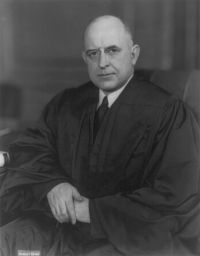
Portrait of Stanley Forman Reed Stanley Forman Reed Senko v. La Crosse Dredging Corporation…

Our holding there that the determination of whether an injured person was a 'member of a crew' is to be left to the finder of fact meant that juries have the same discretion they have in finding negligence or any other fact. The essence of this discretion is that a jury's decision is final if it has a reasonable basis, whether or not the appellate court agrees with the jury's estimate.
Source: Wikisource

Portrait of Stanley Forman Reed Stanley Forman Reed Senko v. La Crosse Dredging Corporation…

Not only did Senko have nothing to do with navigation, but he did not 'aid' navigation in the sense of helping to maintain the vessel or its crew in a condition to navigate. [9] He was simply a handy-man and assistant for a crew of men operating an earth-removing machine which happened to be afloat and which, occasionally and always in Senko's absence, was pushed from place to place.
The fact that it was a jury that found Senko to be 'a member of a crew' does not relieve us of the responsibility for seeing to it that what is in effect a jurisdictional requirement of the Jones Act is obeyed.
Source: Wikisource

Portrait of Stanley Forman Reed Stanley Forman Reed Senko v. La Crosse Dredging Corporation…

Petitioner's relationship to this dredge met none of these requirements. He was simply an ordinary laborer, a member of the Common Laborers' Union. Temporarily unemployed, he applied to his union, which sent him to respondent as a laborer. Respondent was a contractor on the canal-digging project, and employed a construction gang on shore under the supervision of a foreman. This foreman assigned Senko to take the job of 'deckhand' or 'laborer' on respondent's dredge, the James Wilkinson, a craft which, though afloat, served as a stationary earth-removing machine.
Source: Wikisource

Get perspective with Kwize: daily news enlightened by great literature