Summary

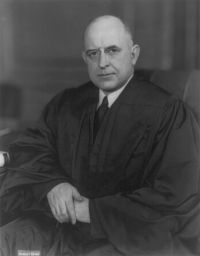
Portrait of Stanley Forman Reed Stanley Forman Reed United States v. Appalachian Electric Power Company…

In our view, it cannot properly be said that the constitutional power of the United States over its waters is limited to control for navigation. By navigation respondent means no more than operation of boats and improvement of the waterway itself. In truth the authority of the United States is the regulation of commerce on its waters. Navigability, in the sense just stated, is but a part of this whole. Flood protection, watershed development, recovery of the cost of improvements through utilization of power are likewise parts of commerce control.
Source: Wikisource

Portrait of Stanley Forman Reed Stanley Forman Reed United States v. Appalachian Electric Power Company…

If anything has been settled by our decisions it is that, in order for a water to be found navigable, navigability in fact must exist under 'natural and ordinary conditions'. This means all conditions, including a multiplicity of obstacles, falls and rapids which make navigation a practical impossibility. The court now, however, announces that 'natural and ordinary conditions' refers only to volume of water, gradients, and regularity of flow.
Source: Wikisource

Portrait of Stanley Forman Reed Stanley Forman Reed United States v. Appalachian Electric Power Company…

It is of course true that if a stream in its natural and ordinary condition is navigable it does not cease to be so because improvements have bettered the conditions of navigation. [100] But the converse is not true,-that where a stream in its natural and ordinary condition is nonnavigable, a project to build a canal along its entire course, or dams and locks every few miles, at enormous expense, would render it a navigable water of the United States. Who is to determine what is a reasonable or an unreasonable improvement in the circumstances
Source: Wikisource

Get perspective with Kwize: daily news enlightened by great literature