Summary

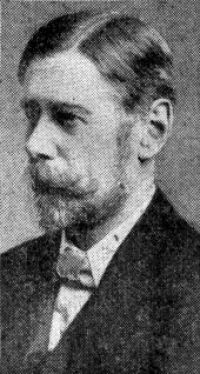
Portrait of Stephen Gwynn Stephen Gwynn The venture; an annual of art and literature (1903)

If one can assert anything positively in criticism, it is that Pope's ideal of poetry is unpoetic. But it does not follow that Pope was not a poet. That he was a great writer no one will deny. The disservice which Pope did to English literature—and it has been much exaggerated—is that he used his authority to formulate as possessing universal validity the rules which it suited his own genius to observe. His first study was to be "correct;" to make the expression of his thought sharply defined in form, and completely intelligible
Source: Wikisource

Portrait of Stephen Gwynn Stephen Gwynn The venture; an annual of art and literature (1903)

It is seldom, however, that Pope can be excelled in condensation and the happy turn of a phrase. His workmanship everywhere approaches perfection. The inherent weakness of his poetry is, as Mark Pattison has pointed out, that the workmanship often outvalues the matter; that our admiration is compelled for the expression of a mean sentiment, a half-truth, or an ignorant fallacy. To his mastery of style Pope united no store of knowledge, no wide and lofty range of feeling.
Source: Wikisource

Portrait of Stephen Gwynn Stephen Gwynn The venture; an annual of art and literature (1903)

But Pope's poetry, where it has the character of true poetry, is always the utterance of a strong passion—the passion of hate. And herein he differs from many other satirists, but above all from the greatest of all British satirists, his friend Swift, in that his hatred was not for principles but for persons; not for man or men, but this or that individual. Literary and social jealousy is the strongest of all his feelings.
Source: Wikisource

Get perspective with Kwize: daily news enlightened by great literature