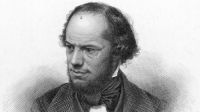
Rufus Wilmot Griswold

Rufus Wilmot Griswold

Summary

Portrait of Rufus Wilmot Griswold Rufus Wilmot Griswold The Poets and Poetry of America (1842)

But how many of them all are free from that vassalage of opinion and style which is produced by a constant study of the literature of that nation whose language we speak, whose manners we adopt, and which was the home of our ancestors, and is the holy land to which our own spirits turn?
It is said that the principles of our fathers are beginning to be regarded with indifference; that love of country is decaying; and that the affections of the people are in the transition state from the simplicity of democracy to the gilded shows of aristocratic government.
Source: Wikisource

Portrait of Rufus Wilmot Griswold Rufus Wilmot Griswold The Poets and Poetry of America (1842)

The national tastes and feelings are fashioned by the subjects of kings; and they will continue to be so, until, by an honest and politic system of reciprocal copyright, such protection is given to the native mind as will enable men of the first order of genius to devote themselves to authorship. Literature, not less than wealth, adds to a nation's happiness and greatness; the man of letters should receive as much of the fostering care of the government as is extended to the agriculturist or the manufacturer.
There are, connected with this country, no lack of subjects for poetry and romannce.
Source: Wikisource

Portrait of Rufus Wilmot Griswold Rufus Wilmot Griswold The Poets and Poetry of America (1842)

The elements of power in all sublime sights and heavenly harmonies should live in the poet's song, to which they can be transferred only by him who possesses the creative faculty. The sense of beauty, next to the miraculous divine suasion, is the means through which the human character is purified and elevated. The creation of beauty, the manifestation of the real by the ideal, "in words that move in a metrical array," is poetry.
Source: Wikisource

Get perspective with Kwize: daily news enlightened by great literature