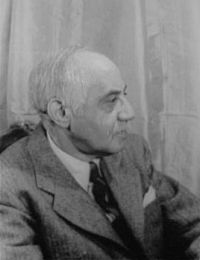
William Stanley Braithwaite

William Stanley Braithwaite

Summary

Portrait of William Stanley Braithwaite William Stanley Braithwaite The New Negro (1925)

It is only through the intense, passionate idealism of such substance as makes The Souls of Black Folk such a quivering rhapsody of wrongs endured and hopes to be fulfilled that the poets of the race with compelling artistry can lift the Negro into the only full and complete nationalism he knows—that of the American democracy. No other book has more clearly revealed to the nation at large the true idealism and high aspiration of the American Negro.
Source: Wikisource

Portrait of William Stanley Braithwaite William Stanley Braithwaite The New Negro (1925)

Perhaps I ought to qualify this last statement that the Negro was in American literature generations before he was part of it as a creator. From his very beginning in this country the Negro has been, without the formal recognition of literature and art, creative. During more than two centuries of an enslaved peasantry, the race has been giving evidence, in song and story lore, of an artistic temperament and psychology precious for itself as well as for its potential use and promise in the sophisticated forms of cultural expression.
Source: Wikisource

Portrait of William Stanley Braithwaite William Stanley Braithwaite The New Negro (1925)

At best this school of Reconstruction fiction represents the romanticized high-lights of a régime that as a whole was a dark, tragic canvas. At most, it presents a Negro true to type for less than two generations. Thomas Nelson Page, kindly perhaps, but with a distant view and a purely local imagination did little more than paint the conditions and attitudes of the period contemporary with his own manhood, the restitution of the over-lordship of the defeated slave owners in the Eighties.
Source: Wikisource

Get perspective with Kwize: daily news enlightened by great literature