Summary

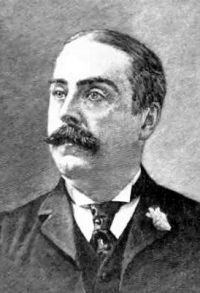
Portrait of Edgar Fawcett Edgar Fawcett A Few More Words about Miss Rives (1888)

There is a kind of novel produced nowadays in which it would appear as if everything were fine except the English of the characters. Nature so far transcends human nature in what one might almost call a patrician excellence of deportment that we read on the one hand of delicate mists curling ethereally along mountain-sides, of prismatic sunsets, of valleys empurpled by twilight, and on the other hand encounter the whole English grammar in about as unpleasant a state of corruption as possible.
Source: Wikisource

Portrait of Edgar Fawcett Edgar Fawcett A Few More Words about Miss Rives (1888)

Miss Rives has steeped a love-story in realism, acted on by some peculiar force of her time, without stopping to consider what dangers, with a writer of her strongly romantic trend, must surround any such literary exploit, unless a good deal of discriminative caution be made to accompany it. But caution of this kind does not usually consort with authors of youth and inexperience. Had Miss Rives been commencing her career as a novelist about a half-century ago, she would have painted the episodes between Barbara and her lover in hues that no one would have found too glaring.
Source: Wikisource

Portrait of Edgar Fawcett Edgar Fawcett A Few More Words about Miss Rives (1888)

Nothing can be better in its way than the despair of the lovers over Mr. Buzzy's quaint and maddening garrulity as he is driven in their company to the station. They want to whisper sweet nothings in one another's ears—to sit with clasped hands—to be left unmolested there in the back of the lumbering vehicle during those few moments of intercourse which remain for them.
Source: Wikisource

Get perspective with Kwize: daily news enlightened by great literature