Summary

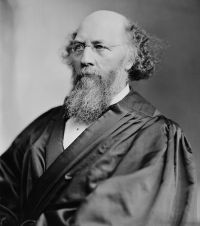
Portrait of Stephen Johnson Field Stephen Johnson Field Jenkins v. Collrd — Opinion of the Court

There is no corruption of blood; the offender can transmit by descent; his heirs take from him by descent; why, then, is it not most rational to conclude that the dormant and suspended fee has continued in him?' And the court held, after full consideration, that the disabilities which prevented the offending party-Bosworth-from exercising power over the suspended fee, or naked property, was removed by the pardon and amnesty, and that he was restored to all his rights, privileges, and immunities, as if he had never offended, except as to those things which had become vested in other persons
Source: Wikisource

Portrait of Stephen Johnson Field Stephen Johnson Field Jenkins v. Collrd — Opinion of the Court

As the general pardon and amnesty to all persons implicated in the Rebellion are not pleaded by the defendant, to relieve the offending party, whose life estate in the premises in controversay was confiscated, from his disabilities respecting the reversionary interest, or naked fee in the premises, it is claimed that no benefit can be derived from them.
Source: Wikisource

Portrait of Stephen Johnson Field Stephen Johnson Field Jenkins v. Collrd — Opinion of the Court

The only sale and conveyance executed under the decree, as thus seen, were of the life estate of Thomas J. Jenkins in the real property in controversy. No condemnation was had or sale made of any other estate in the premises.
In some of the cases, as, for instance, Bigelow v. Forrest, 9 Wall. 339, a condemnation and sale had been made of the property in fee, and it was held to be valid as a condemnation and sale of the life estate of the offending owner; but the reverse is not true. When the lesser estate-the life estate-is sold, the sale cannot be held to pass the larger estate,-the fee.
Source: Wikisource

Get perspective with Kwize: daily news enlightened by great literature