Summary

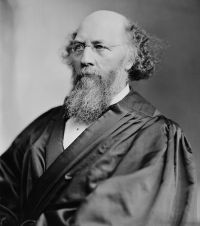
Portrait of Stephen Johnson Field Stephen Johnson Field Conrad v. Waples — Opinion of the Court

What we have to say upon the Confiscation Act, the title which passed by a condemnation and sale under it, and the power of enemies to sell and convey to each other their interest in real property situated within the lines of the other belligerent, will sufficiently express our judgment upon the questions involved, and serve to guide the court below in any subsequent proceedings.
Source: Wikisource

Portrait of Stephen Johnson Field Stephen Johnson Field Conrad v. Waples — Opinion of the Court

The character of the parties as rebels or enemies did not deprive them of the right to contract with and to sell to each other. As between themselves, all the ordinary business between people of the same community in buying, selling, and exchanging property, movable and immovable, could be lawfully carried on, except in cases where it was expressly forbidden by the United States, or where it would have been inconsistent with or have tended to weaken their authority.
Source: Wikisource

Portrait of Stephen Johnson Field Stephen Johnson Field Conrad v. Waples — Opinion of the Court

The seizure and confiscation of property of persons engaged in the rebellion, and the appropriation of the proceeds to support the army and navy, were supposed-whether wisely or unwisely is immaterial-to have a tendency to insure the speedy termination of the rebellion; and it was to prevent the provisions enacted to enforce the confiscation from being evaded by the parties whose property was liable to seizure, that sales, transfers, and conveyances of it were declared invalid.
Source: Wikisource

Get perspective with Kwize: daily news enlightened by great literature