Summary

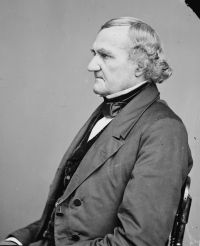
Portrait of John Catron John Catron Erwin v. Lowry — Opinion of the Court

Five years is the time allowed for prosecuting appeals to and writs of error out of this court, and in many cases decrees and judgments are executed before any step is taken to bring the case here; yet in no instance within our knowledge has an appeal or writ of error been dismissed on the assumption that a release of errors was implied from the fact that money or property had changed hands by force of the judgment or decree. If the judgment is reversed, it is the duty of the inferior court, on the cause being remanded, to restore the parties to their rights.
Source: Wikisource

Portrait of John Catron John Catron Erwin v. Lowry — Opinion of the Court

Bemiss, that, where a lien existed on property by a special mortgage before the debtor's death, and the property passed by death and succession, with the lien attached, into the hands of a curator, and was in the course of administration in the Probate Court, the Circuit Court of the United States had jurisdiction, notwithstanding, to proceed against the property, and to enforce the creditor's lien, and to decree a sale of the property, and that such sale was valid.
Source: Wikisource

Portrait of John Catron John Catron Erwin v. Lowry — Opinion of the Court

And we take the rule to be, that although a decree in equity is fully executed, at the instance of the successful party, he cannot complain of his own voluntary acts, if he does perform a condition imposed upon him before he can have the fruits of the decree, although the other party derives a benefit from such performance. If it was otherwise, a writ of error in such a case as the present, or an appeal in equity, might be defeated after the writ of error or appeal was sued out, where there was no supersedeas
Source: Wikisource

Get perspective with Kwize: daily news enlightened by great literature