Summary

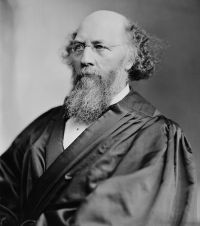
Portrait of Stephen Johnson Field Stephen Johnson Field Miller v. United States — Dissent

The power to make rules concerning captures on land and water is a power to make such rules as Congress may prescribe, subject to the condition that they are within the law of nations. There is a limit to the means of destruction which government, in the prosecution of war, may use, and there is a limit to the subjects of capture and confiscation, which government may authorize, imposed by the law of nations, and is no less binding upon Congress than if the limitation were written in the Constitution.
Source: Wikisource

Portrait of Stephen Johnson Field Stephen Johnson Field Miller v. United States — Dissent

But assuming the severe rule laid down by the chief justice to be the true rule, it applies only to the property of enemies, and by enemies is meant permanent inhabitants of the enemy's country. It is their property alone which is the subject of seizure and confiscation by authority of Congress, legislating under the war powers. Their property is liable, not by reason of any hostile disposition manifested by them or hostile acts committed, or any violations of the laws of the United States, but solely from the fact that they are inhabitants of the hostile country, and thus in law are enemies.
Source: Wikisource

Portrait of Stephen Johnson Field Stephen Johnson Field Miller v. United States — Dissent

There is no difference in the relation between the owner and his property and the government, when the owner is guilty of treason and when he is guilty of any other public offence. The same reason which would sustain the authority of the government to confiscate the property of a traitor would justify the confiscation of his property when guilty of any other offence.
Source: Wikisource

Get perspective with Kwize: daily news enlightened by great literature